
Anti-Static Auto Bags on a Roll
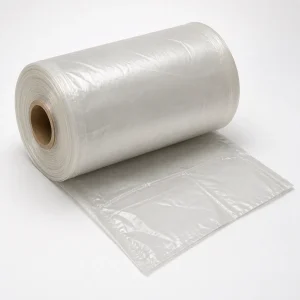
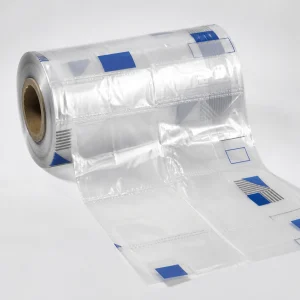
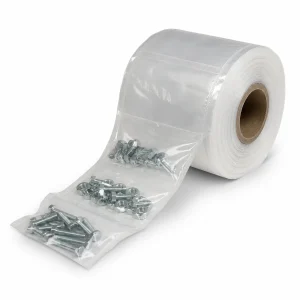
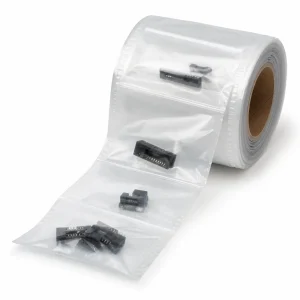
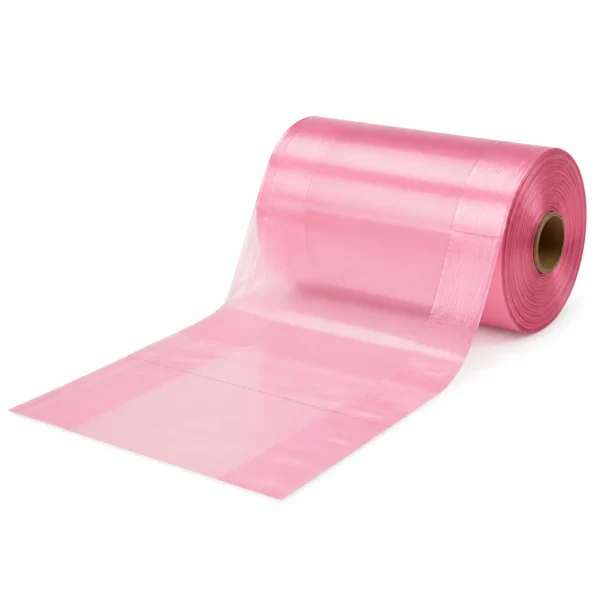
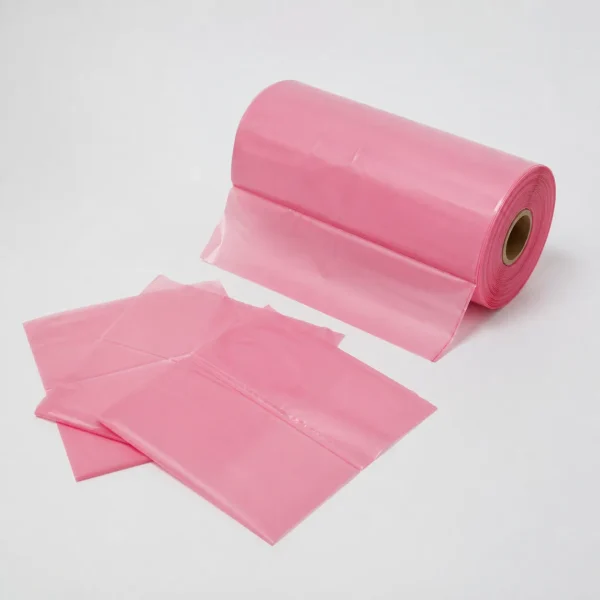
Anti-static auto bags on a roll are made with static-dissipative film that prevents the bag itself from generating or holding a static charge, protecting electronic parts, connectors, and cable components during handling, kitting, and shipping. The pre-opened, perforated roll format lets each bag load and separate cleanly on manual or automated packing lines. We manufacture to your component’s static-control requirement, material, color, dimensions, thickness, and roll configuration. MOQ starts at 30,000 pieces.
How Anti-Static Film Works
Ordinary plastic film can generate several thousand volts of static charge through simple friction (triboelectric charging) — a risk for electrostatic-discharge-sensitive (ESDS) components. Anti-static film is compounded with special additives (often amine-free formulations) so the film itself doesn’t generate or accumulate that charge during normal handling.
The key technical measure is surface resistivity — how easily static charge moves across the film’s surface. Static-dissipative films are generally engineered to fall in the 10⁹–10¹¹ ohms/sq range, with 1 × 10¹² ohms/sq typically treated as an upper limit for dissipative-grade material. (If your production is tested and certified to a specific standard — such as MIL-PRF-81705E Type II or EIA-541 static decay requirements — let us know and we can state your verified compliance here instead of general industry reference figures.)
Two Delivery Formats
| Format | How it’s supplied | Best suited for |
|---|---|---|
| Pre-opened bags on a roll | Individual bags joined on a roll, each with a pre-opened slit and perforated separation line | Automated bagging machines — the machine opens each bag, product is loaded, and the bag is sealed and separated in one motion |
| Anti-static poly tubing | Continuous, seamless tubing wound on a core, with no fixed-length perforation | Long or irregular-length products (PCBs, rails, cable assemblies) — cut and heat-sealed to length as needed with an impulse sealer, so one roll serves multiple product lengths |
Thickness Options
- 1.5–2 mil (approx. 38–50 microns): Standard/light-duty. Suited to lightweight, non-sharp-edged anti-static components.
- 4 mil (approx. 100 microns): Heavy-duty — the most common industrial gauge. Strong puncture and tear resistance, suited to heavier chip packs, pin-header circuit boards, or hardware tools.
- 6–8 mil (up to approx. 200 microns): Extra heavy-duty, used for highly sensitive or heavier industrial components.
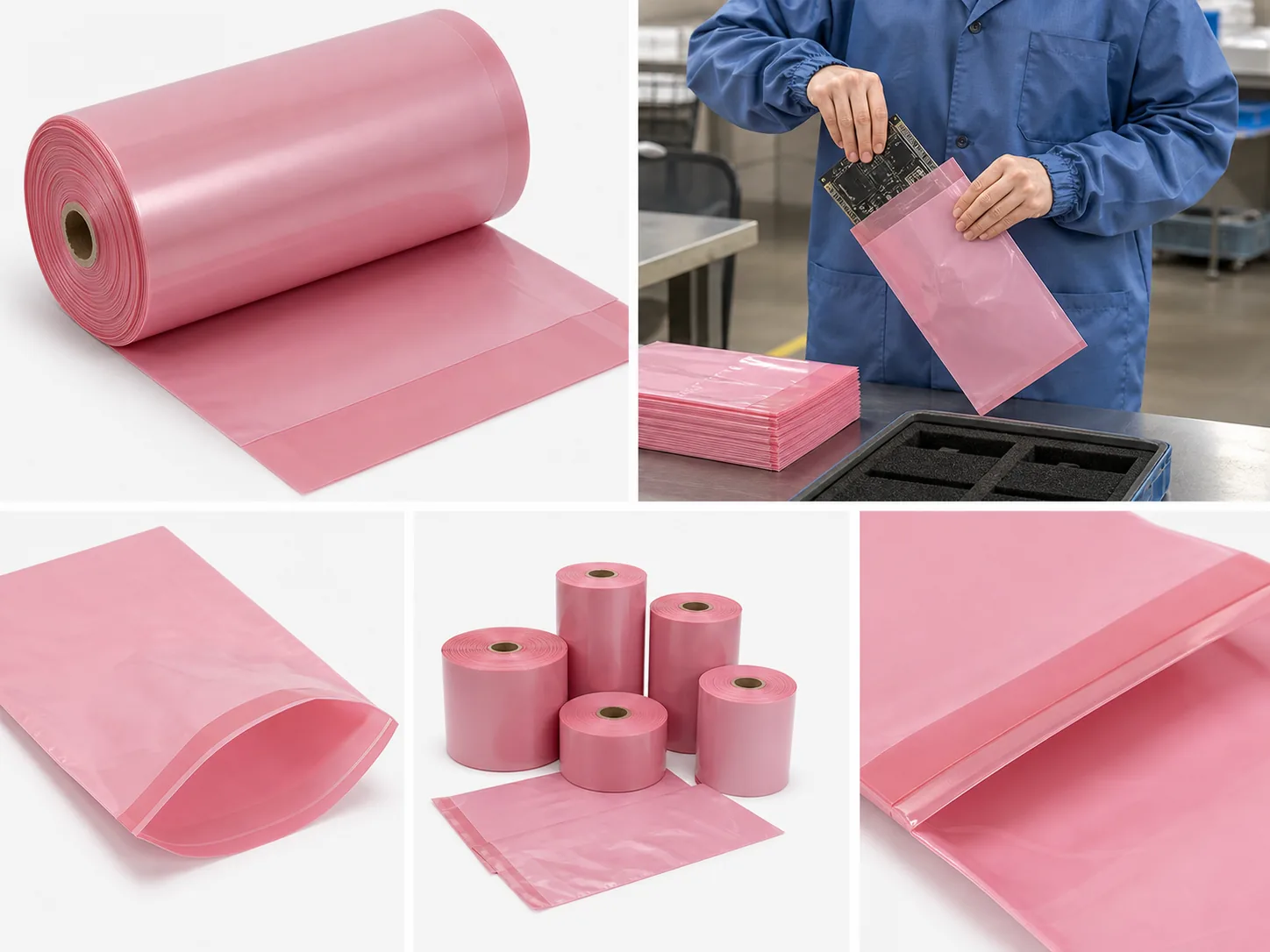
Anti-Static Colors and Protection Levels
The bag’s color is a quick visual indicator of its protection level:
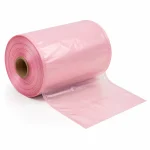
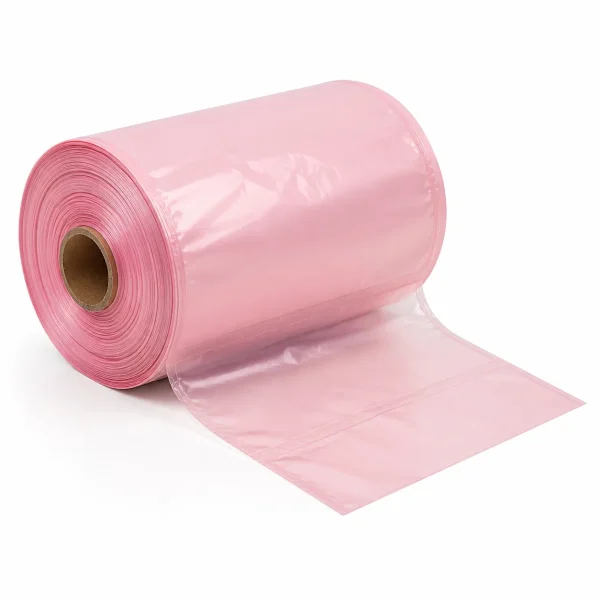
- Pink (Anti-Static): Basic-level protection — the film itself won’t generate static, but it doesn’t block external static fields. Commonly used for screws, housings, and other non-critical components, or as a secondary outer bag for items entering an ESD-controlled area.
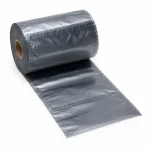
- Black (Conductive): Mid-level conductive protection, made with carbon black material. Quickly dissipates any static charge it contacts, and performance isn’t affected by humidity — but the bag is opaque.
- Silver (Static Shielding): Top-tier protection using a multi-layer shielding structure (semi-conductive outer layer, metallized middle layer, anti-static inner layer) that acts like a Faraday cage — blocking roughly 97% of external static and electromagnetic interference in addition to preventing internal friction charge. This is the standard choice for critical components like PCBs, graphics cards, and CPUs.
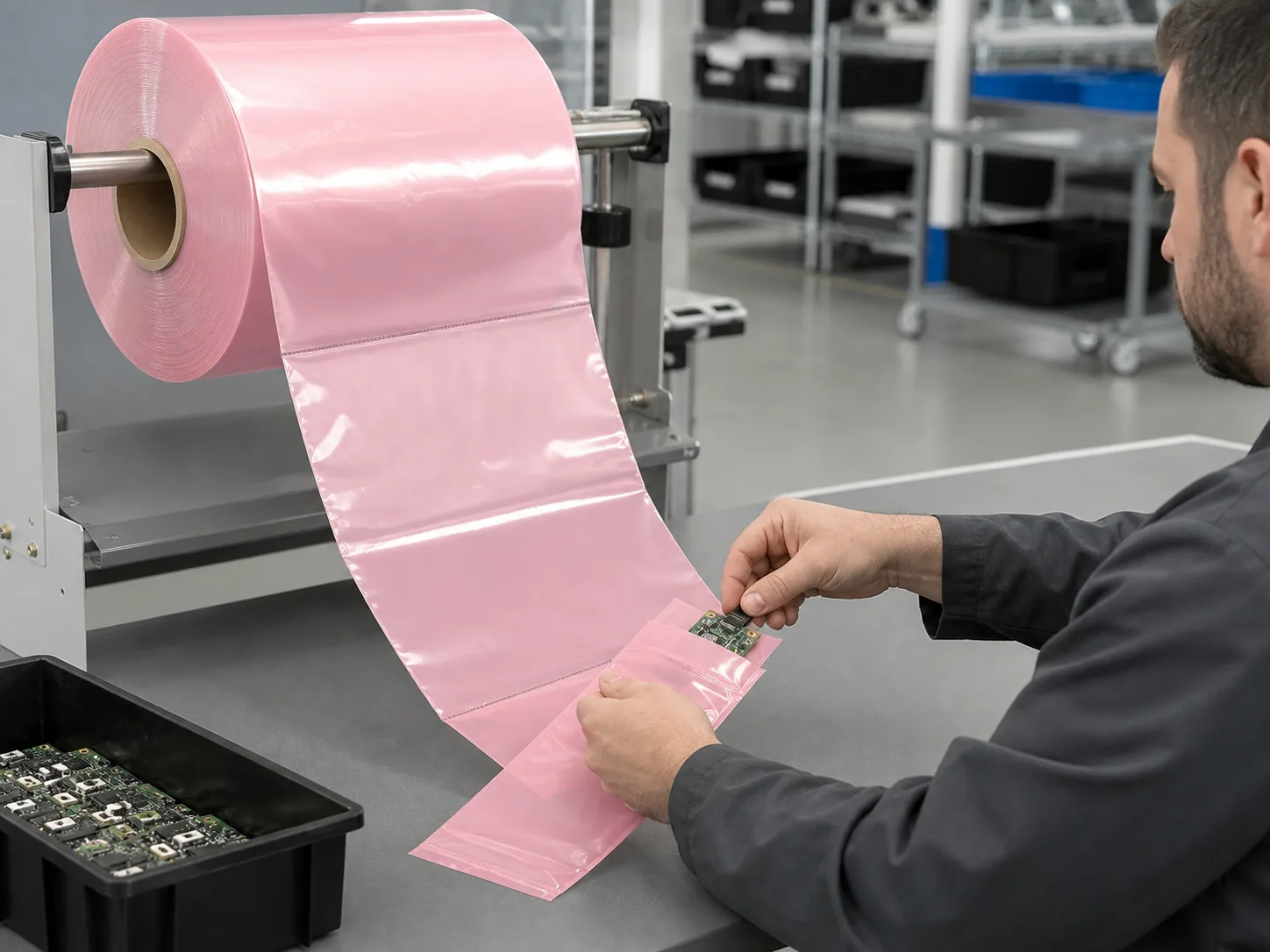
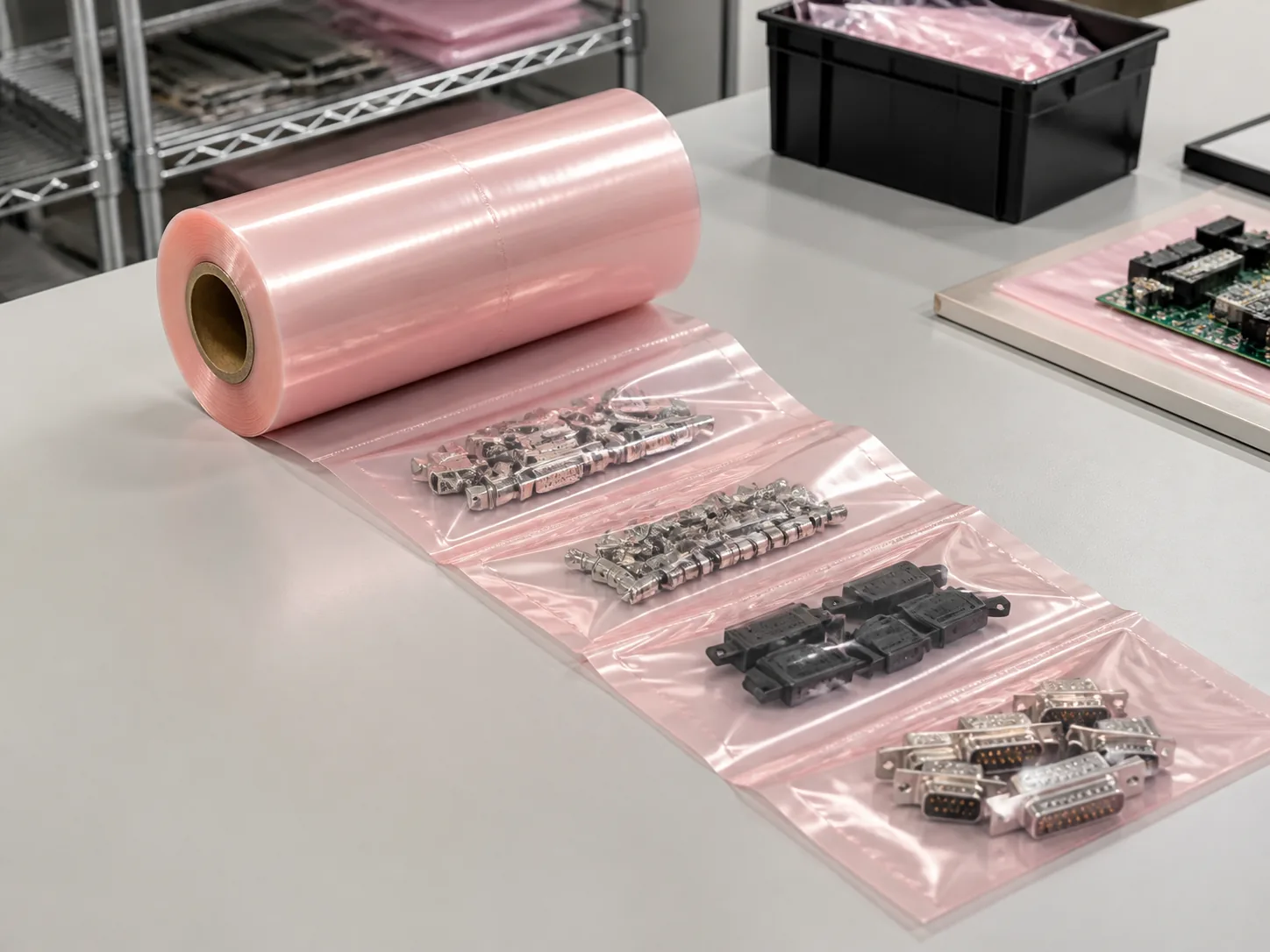
Compare Clear Pre-Opened Bags on a Roll when static control is not required, or review ESD Protective Pre-Opened Bags on a Roll when a separately defined protective requirement applies.
How to Specify for a Quote
Provide your component type and sensitivity level, required protection grade (pink, black conductive, or silver shielding), bag or tubing format, dimensions, thickness, quantity, and your bagging equipment’s make/model. We’ll confirm construction and send a quote.
FAQ
How are anti-static bags different from ordinary polyethylene bags? Anti-static film is compounded with additives so it doesn’t generate or hold static charge through normal handling friction — ordinary polyethylene has no such protection and can build up several thousand volts of static through simple friction.
Are anti-static and ESD protective bags the same? Not always. Anti-static (pink) film offers basic protection against self-generated static but doesn’t block external static fields. ESD shielding bags (typically silver, multi-layer) add a Faraday-cage-type barrier against external static and electromagnetic interference — needed for highly sensitive components like PCBs, graphics cards, and CPUs.
What’s the difference between pre-opened bags on a roll and anti-static tubing? Pre-opened bags on a roll are individual, pre-opened, perforated bags joined end to end — built for automated bagging machines. Tubing is a continuous, seamless roll with no fixed length, cut and sealed to size with an impulse sealer — better suited to long or irregular-length products like PCBs or cable assemblies.
What thicknesses are available? 1.5–2 mil for standard/light-duty use, 4 mil for heavy-duty (the most common industrial gauge), and 6–8 mil for extra-heavy-duty or highly sensitive components.
Can anti-static bags run on automated packing equipment? Yes — we fit rolls for Autobag®, APS, PDC International, Sharp Packaging (MAX), and FAS equipment. Send your machine’s make/model or current bag spec and we’ll match perforation, pitch, roll core, and feed direction to it.
What’s the minimum order quantity? MOQ is 30,000 pieces per size/spec combination.