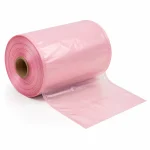
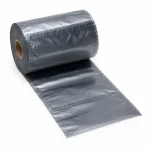
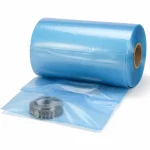
Pre-opened poly bags for automated packaging equipment are individual bags connected in a continuous roll, presented with the mouth open for loading and separated by controlled perforations. They can support automated or semi-automated packing when the bag dimensions, film, perforation, roll configuration and sealing conditions are matched to the product and the actual equipment.
This guide explains the bag structure, packaging sequence and technical information a buyer should provide before requesting a production quotation. It is written for packaging engineers, production teams, procurement managers, distributors and automation integrators evaluating pre-opened bags on a roll for an industrial process.
Key Takeaways
- A pre-opened roll presents one bag at a time for loading, sealing and separation.
- Bag width and length must allow for the product, loading clearance and the sealing area—not just the product’s nominal dimensions.
- Film type and thickness are application-specific and must be confirmed for the packed weight, handling conditions and required function.
- Perforation strength, bag opening, roll direction, core and winding affect feeding and indexing.
- Equipment compatibility should be confirmed from the machine specification, bag drawing and trial conditions; universal compatibility should not be assumed.
- Vent holes, printing, opaque film, anti-static, ESD and VCI functions require product-specific technical review.
- A useful RFQ includes product samples or drawings, bag dimensions, material, thickness, roll details, filling method and sealing requirements.
What Are Pre-Opened Poly Bags?
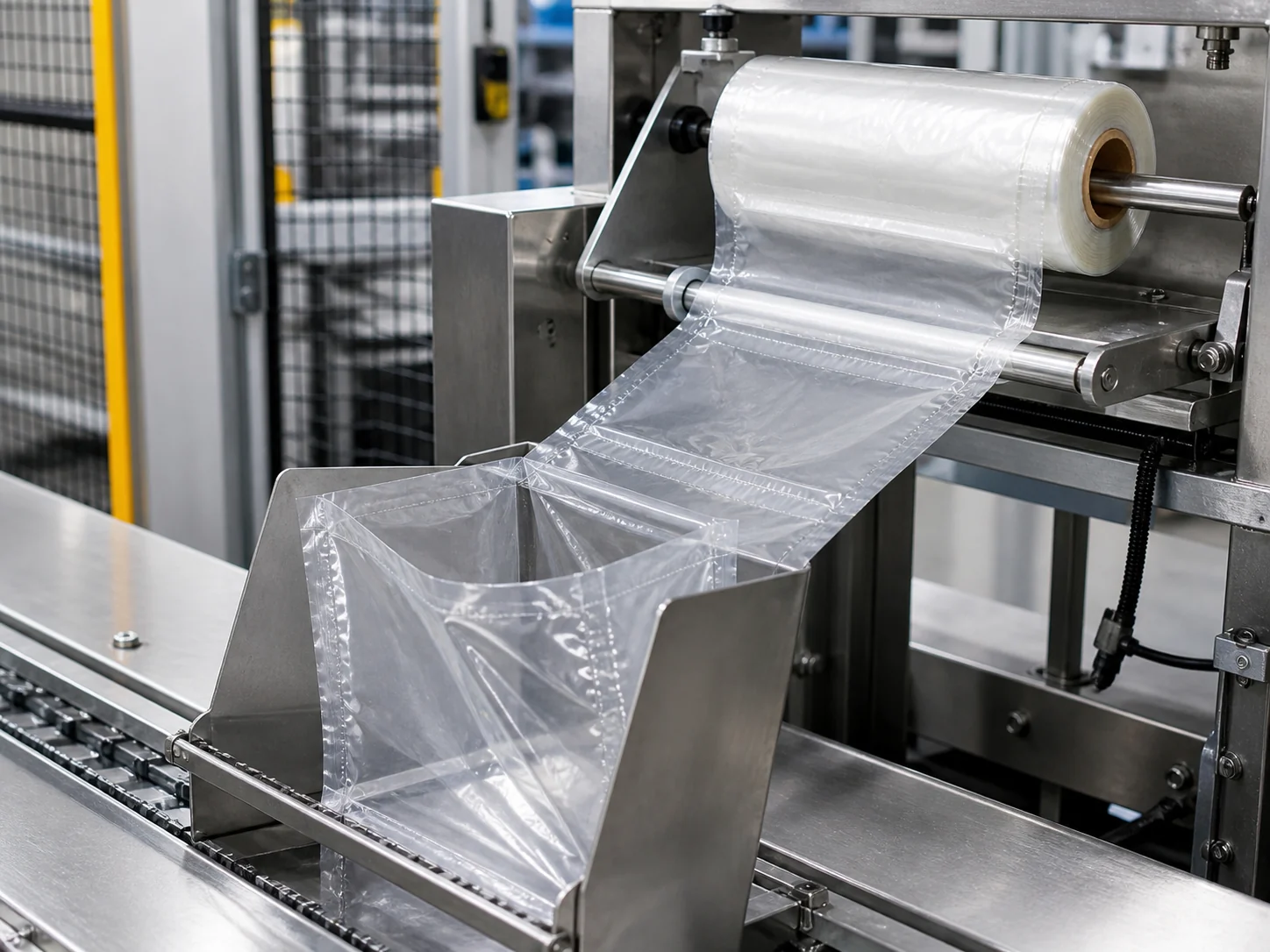
Pre-opened poly bags are manufactured as a connected series of bags, usually supplied on a roll. The leading bag is positioned so its mouth can be opened or held open at the loading station. After the product enters, the package can be sealed and separated at the perforation before the next bag advances.
The roll format organizes individual bags in a repeatable sequence. A typical construction includes a bag mouth, side seals, a bottom seal, a separation perforation and a roll or core configuration. The precise relationship between the opening, seal and perforation depends on the approved bag drawing and packing method.

How Do Pre-Opened Bags Work with Automated Packaging Equipment?
The basic sequence is straightforward, but dependable operation depends on the interaction between the bag and the equipment. The normal process includes the following stages:
- Roll feeding: The roll is mounted or presented in the required orientation, and the film path is established through the feeding system.
- Bag indexing: The equipment advances one bag to a repeatable loading position.
- Bag opening: Air, mechanical fingers or another equipment-specific method presents the mouth for loading.
- Product loading: The product is placed manually or delivered by a feeder, conveyor, chute, counting system or other process.
- Sealing: Where heat sealing is required, the seal area is closed using validated temperature, time and pressure settings for the selected film.
- Separation: The completed bag separates at the intended perforation or cut position.
- Next-bag presentation: The system indexes the next open bag and repeats the cycle.
If a bag does not open consistently, indexes at the wrong length or separates too early, the cause may involve dimensions, film stiffness, static behavior, perforation design, winding, roll tension or the equipment setup. These variables should be reviewed together rather than treating the bag as an isolated component.
Pre-Opened Bag Construction
Construction details determine how the bag travels through the process and how the operator or equipment handles it. The following elements should appear on the controlled bag specification or drawing.
| Construction element | Why it matters | What to confirm |
|---|---|---|
| Bag opening | Provides access for manual or automatic loading | Opening orientation, presentation method and loading clearance |
| Bottom and side seals | Define the usable bag cavity and containment | Seal location, product clearance and required closure process |
| Separation perforation | Allows one completed bag to separate from the web | Location, tear behavior and equipment indexing relationship |
| Roll direction and winding | Controls which face and opening reach the loading position | Inside/outside winding, leading edge and print orientation |
| Core and roll configuration | Affects mounting, handling and available machine space | Core requirement, roll diameter, bag count or roll weight as applicable |
| Vent holes | Can release trapped air in suitable applications | Hole pattern, position and effect on packed-product requirements |
| Printing | Supports identification, instructions or brand presentation | Artwork, print area, colors, registration and orientation |
| Easy-open feature | May assist downstream opening when approved | Perforation position and acceptable tear path |
Materials Available for Pre-Opened Bags
Material selection begins with the packed product, required function, sealing method and handling environment. “Poly bag” is a broad description; the final PE construction and any functional additive or protective structure must be stated in the quotation and approved specification.
Clear PE Film
Clear film supports visual identification and count checking. It is commonly considered for general industrial parts, hardware, cables, accessories and kits when no special protective function is being claimed.
Opaque Film
Opaque film can conceal contents or provide a contrasting surface for presentation and printing. Buyers should define the required opacity, color, artwork area and sensor or registration considerations. See the live white opaque pre-opened bags specification for this product direction.
Anti-Static and ESD Structures
Anti-static and ESD packaging are not interchangeable labels. The required protective mechanism, handling environment and acceptance criteria must be documented. For controlled applications, compare the anti-static bag requirements with the separate ESD protective bag specification.
VCI Material
VCI pre-opened bags are evaluated for suitable metal parts when corrosion-protection requirements are defined. The metal type, cleanliness, packing environment, storage conditions and validation criteria should be supplied. The VCI pre-opened bag product page explains the information needed for technical review.
Recycled-Content PE
Recycled-content material may be evaluated where the application permits it. Buyers should state the requested content, appearance, film-performance and documentation requirements. Availability and suitability must be confirmed for the particular construction; environmental performance should not be inferred from the product name alone.
Sizes, Thicknesses and Custom Specifications
Bag size is a system variable. Width must accommodate the product profile and loading path. Length must account for the product, bottom-seal position, headspace, sealing allowance and separation geometry. Film thickness is quote-specific and should be selected after considering weight, edges, handling, protection and equipment response.
| Specification | What buyers should define |
|---|---|
| Bag width | Product width, depth or diameter; loading clearance; machine width limits |
| Bag length | Product length, sealing allowance, headspace and index length |
| Film thickness | Requested mil or micron value, packed weight, edges and handling conditions |
| Material | PE construction and any functional requirement such as opacity, anti-static, ESD or VCI |
| Roll/core configuration | Core, winding direction, roll diameter, handling limit and presentation |
| Perforation | Position and separation behavior required by the packing sequence |
| Vent holes | Whether ventilation is required, plus approved location and pattern |
| Printing | Artwork, print area, colors, registration, orientation and version control |
Verified producible size examples for pre-opened bags include the dimensions below. They are examples—not manufacturing limits—and final dimensions must be confirmed against the product and equipment.
| Width × length | Approximate metric dimensions | Example specification context |
|---|---|---|
| 3 × 4 in | 76 × 102 mm | Compact parts and components |
| 4 × 6 in | 102 × 152 mm | Small hardware or accessory packs |
| 5 × 8 in | 127 × 203 mm | Repair kits and cable parts |
| 6 × 10 in | 152 × 254 mm | Longer industrial components |
| 8 × 12 in | 203 × 305 mm | Larger assemblies or kits |
| 10 × 15 in | 254 × 381 mm | Broad or longer packaged items |
Custom dimensions are developed from product size, packaging equipment, filling, sealing, material and application requirements. Thickness availability must be confirmed for the selected material structure rather than assumed from a generic range.
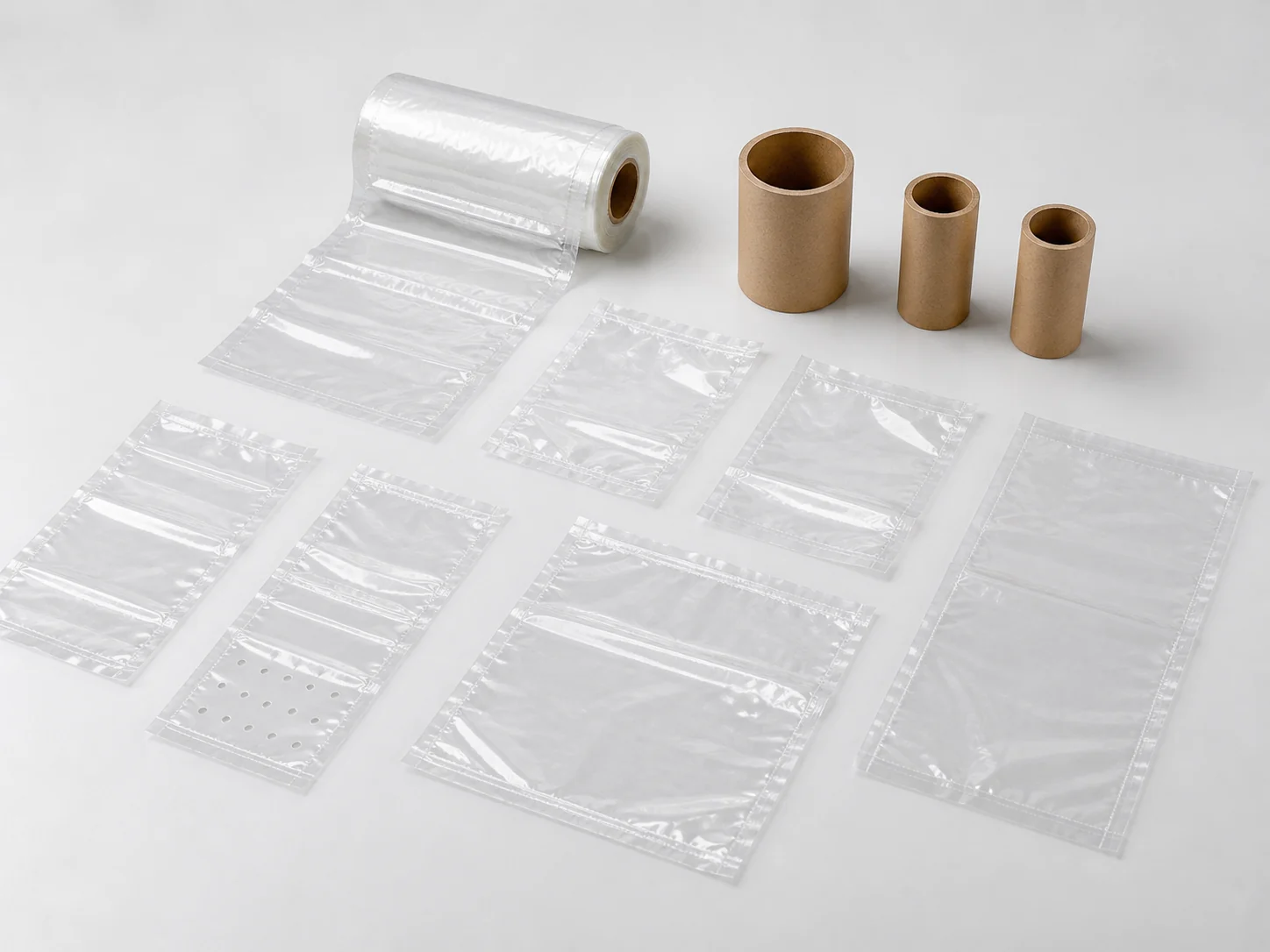
Types of Pre-Opened Bags for Automated Packaging
- Clear pre-opened bags: for product visibility and general industrial packing where no special protective function is claimed.
- White opaque bags: for content concealment and a contrasting presentation or print surface.
- Clear-front/white-back bags: for a visible product face and an opaque backing panel; review the clear-front and white-back configuration.
- Anti-static bags: for applications with a defined anti-static requirement and validation approach.
- ESD protective bags: for documented electrostatic-protection requirements and approved material structures.
- VCI bags: for suitable metal-part applications with specified corrosion-protection conditions.
- Vented bags: with a confirmed vent-hole pattern to release trapped air where the application permits.
- Printed bags: with artwork, orientation and registration reviewed against the roll and equipment.
- Custom-size bags: developed around the product envelope, loading clearance, seal area and equipment limits.
What Industries Use Pre-Opened Bags?
Electronics and Electrical Assembly
Suitable applications can include cables, connectors, accessories, repair kits and components. If electrostatic protection is required, the buyer must define the protection mechanism and acceptance criteria instead of relying on a general “electronics bag” description.
Automotive and Industrial Parts
Pre-opened bags can organize suitable fittings, service parts, small assemblies and component kits. Product edges, weight, oils or corrosion risk may change the required material and thickness.
Hardware and Fasteners
Nuts, bolts, screws, washers and mixed hardware kits are common candidates for repeatable counting and bagging. The bag must be sized for the quantity, sharp edges, drop path and seal clearance.
Fulfillment, Apparel and Accessories
Roll-fed formats may support suitable soft goods, accessories and prepared kits. The closure, label area, opacity, dimensions and downstream shipment handling must be reviewed for the specific process.
Healthcare-Related Components
General non-sterile components or accessories may be evaluated when the required material and handling conditions are defined. A standard industrial pre-opened bag must not be represented as sterile packaging or as meeting a medical requirement without documented evidence.
How to Choose Pre-Opened Bags for Your Packaging Machine
Start with the machine and product data, not a generic compatibility claim. A bag that fits one roll-fed system may need a different opening, perforation, core, winding direction or film response for another system.
Provide the following information for an equipment-focused review:
- equipment type, model information or controlled machine drawing where available;
- current bag sample and specification, if an existing package runs successfully;
- product dimensions, weight, orientation and loading method;
- finished bag width and length, including seal and loading allowance;
- requested material, function, thickness and appearance;
- sealing method and relevant process conditions;
- perforation position and required separation behavior;
- vent-hole and printing requirements;
- core, winding direction, roll diameter and roll-handling constraints;
- target operating conditions and any trial or acceptance criteria.
Expected packaging speed can help define the trial conditions, but a bag supplier should not promise a speed or universal machine fit without reviewing the complete system. Feed stability, product presentation, sealing and discharge all contribute to actual output.
Custom Pre-Opened Bags from Runsheng Packing
Runsheng Packing develops pre-opened bag specifications around the packed product and the intended packaging process. Available project variables can include custom dimensions, quote-specific thickness, clear or opaque appearance, functional materials, printing, vent holes, perforation configuration, and roll or core requirements where confirmed during technical review.
For a useful quotation, provide dimensions, material or functional requirement, thickness, quantity, artwork, perforation, venting, roll configuration, packed product, filling and sealing method, and equipment information. Samples or controlled drawings are especially important when fit, registration or automated feeding is critical.
Frequently Asked Questions
What are pre-opened bags on a roll?
They are individual bags connected in a continuous roll, with each bag presented open for loading and separated by a controlled perforation or approved separation feature.
Can pre-opened bags be used with automated packaging equipment?
Yes, when the bag dimensions, opening, film, perforation, winding and roll configuration are matched to the equipment and packing process. Compatibility requires technical confirmation.
What materials are available for pre-opened bags?
Projects may use a confirmed PE construction, clear or opaque film, or application-specific anti-static, ESD, VCI or recycled-content options. The final structure depends on the required function and approval criteria.
Can bag size and thickness be customized?
Custom dimensions and quote-specific thickness can be evaluated. Supply product dimensions, weight, loading clearance, sealing allowance, handling conditions and equipment limits.
Are vent holes available?
Vent holes can be evaluated where the application permits them. Specify the purpose, pattern and location so their effect on the package can be reviewed.
Can pre-opened bags be custom printed?
Printing can be reviewed from the artwork, print area, colors, registration, film, winding direction and equipment requirements. Availability is confirmed during quotation.
How do I determine the correct bag size for my packaging machine?
Begin with the product envelope, loading clearance and seal area, then check the resulting width and index length against the equipment specification. A current bag sample or machine drawing improves the review.
What information should I provide when requesting a quote?
Provide bag width and length, thickness, material or function, quantity, product details, sealing method, perforation, venting, printing, roll/core data, equipment information and any acceptance criteria.
See Also
- Browse the pre-opened bags on a roll category
- Read the existing overview of bags for automated packing machines
- Review white opaque pre-opened bags
- Review ESD protective pre-opened bags
Request a Technical Bag Review
Send your product dimensions, proposed bag specification, packing method and equipment information. Runsheng Packing can review the requested construction and prepare a B2B quotation based on the confirmed project requirements.