

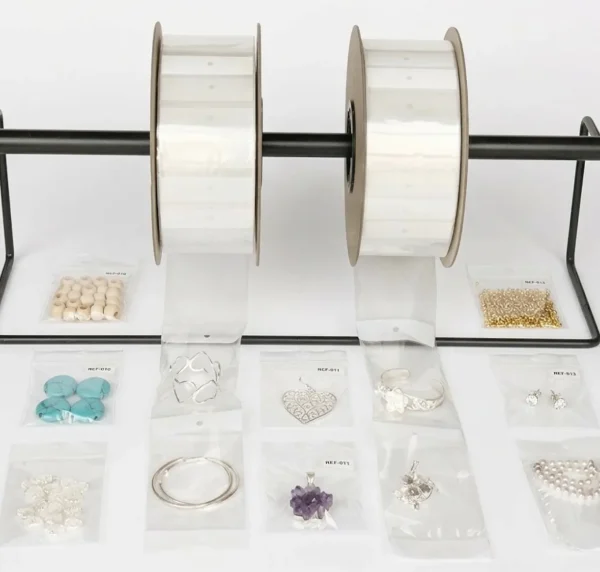

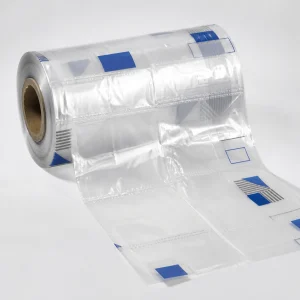
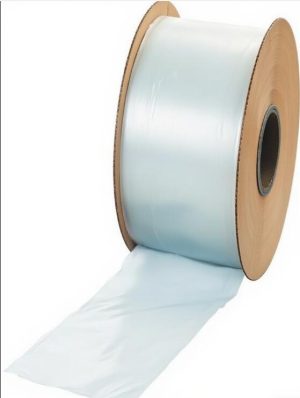
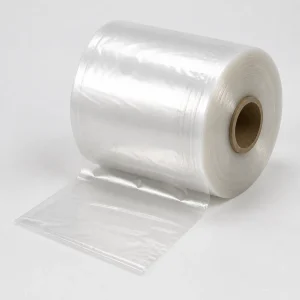
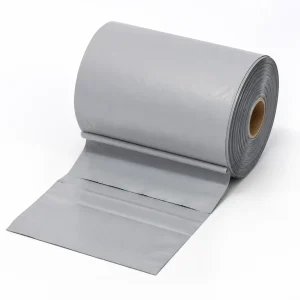
Pre-Opened Bags on a Roll with Air Vent Hole & Tear Notch
Specifications
| Item | Detail |
|---|---|
| Format | Pre-opened, perforated bags on a roll |
| Material | PE film: clear, white / clear and other films on request |
| Thickness | 1.5 to 4 mil |
| Size | Custom width and length |
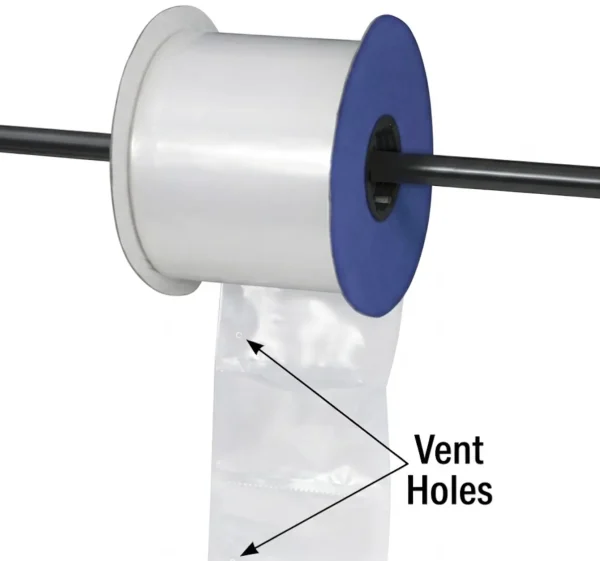
| Vent hole | Round hole; size, number and position set to your product |
| Tear notch | At the side of the bag or in the skirt; position set to your design |
| Printing | Blank, or up to 8-color custom print |
| MOQ | 30,000 pieces per size and spec |
| Lead time | 15–35 working days after design confirmation |
| Trade term | FOB Shenzhen |
Applications
- Garments, textiles and soft goods
- Cables, chargers and accessories
- Hardware kits and fasteners
- Repair, service and spare-part kits
- Foam, rubber and light plastic parts
- Printed documents and instruction packs
For bags without these features, see our clear and custom printed pre-opened bags on a roll. For a size not listed, see custom size pre-opened bags on a roll. For heavier parts, see heavy-duty pre-opened and perforated bags on a roll.
Why Add an Air Vent Hole to Pre-Opened Bags on a Roll?
When a bagging machine heat-seals a filled bag, air stays trapped inside. A vent hole gives that air a way out, so the problems below are reduced:
- Pillowed bags that look inflated and do not lie flat
- Bags bursting when filled bags are stacked, compressed or packed in a carton
- Wasted carton space, because inflated bags take more volume and fewer fit per case
- Unstable stacking on pallets and in shipping cartons
Vent holes suit soft or light goods that sit loosely in the bag, such as garments and textiles, cables and accessories, foam parts, small hardware kits and kitted components. The hole size, number of holes and position are set to your product and seal area.
Why Add a Tear Notch?
A tear notch is a small cut in the bag that lets the end user start a tear by hand. On pre-opened bags on a roll, the notch can be placed at the side of the bag or in the skirt. It is useful when your customer opens the bag at home, on the shop floor or at a workbench and you do not want them to use scissors or a knife. Typical uses include accessory and repair kits, cables and hardware sets, consumer products and instruction or document packs.
Vent Hole, Tear Notch or Both?
| Your need | Recommended feature |
|---|---|
| Filled bags look inflated or burst when stacked | Air vent hole |
| Too few bags fit in each carton | Air vent hole |
| Customer opens the bag by hand and no tool is available | Tear notch |
| Soft goods packed fast on an automatic bagger, opened by the end user | Vent hole and tear notch |
| Large area of air release across the whole bag | See vented micro-perforated bags on a roll |
Vent Hole vs Micro-Perforation
A vent hole is a small, round opening placed at a set position on the bag. It suits products where one or a few holes are enough to release the air and the parts are larger than the hole. Micro-perforation is a pattern of very small holes that releases air over a wider area, which suits large bags and tight anti-pillowing needs. If you need micro-perforation, see our vented micro-perforated bags on a roll. If you are not sure which fits your product, send a sample and we recommend one.
Machine Fit
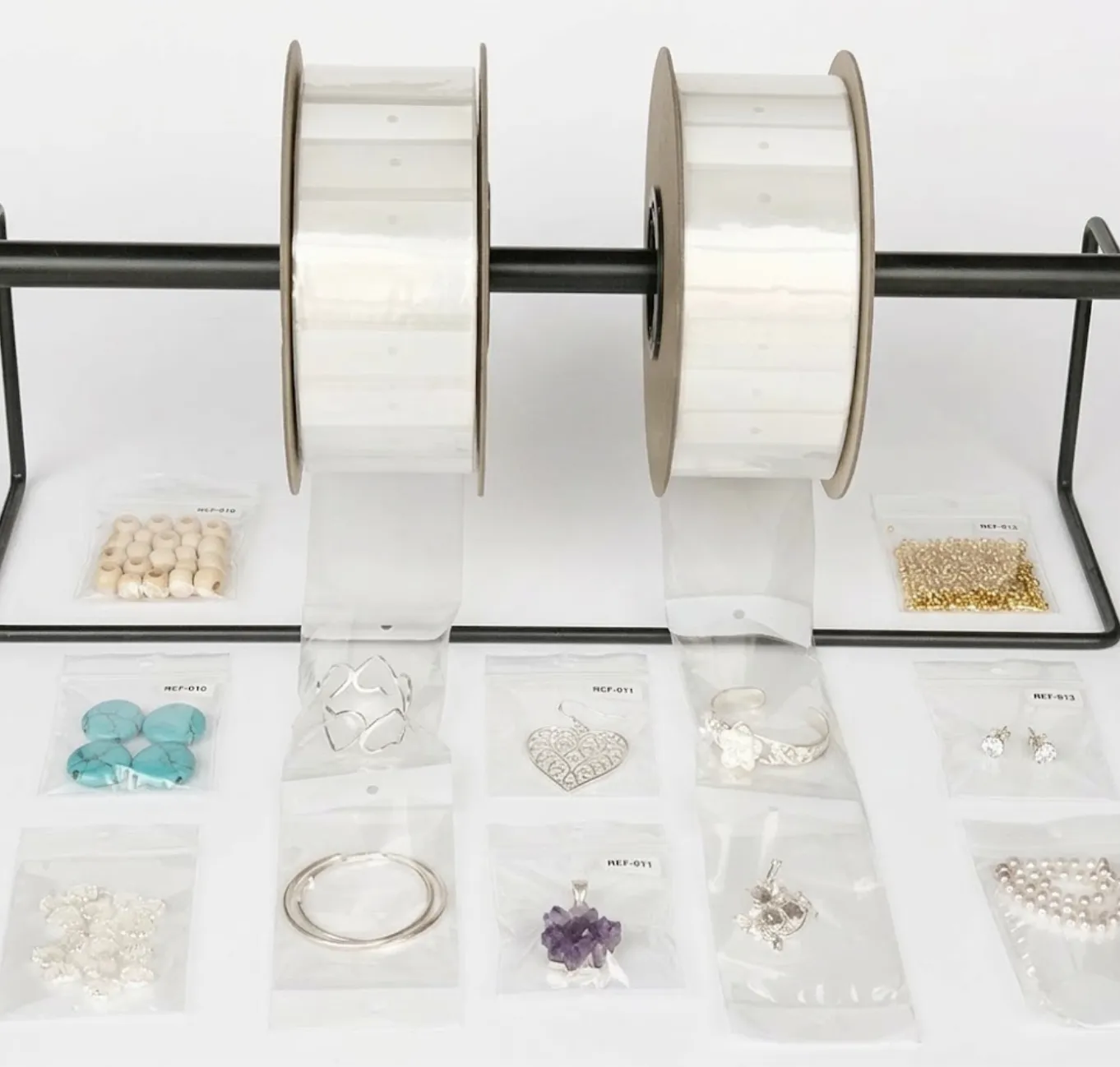
We match the roll to your machine rather than claiming universal fit. Send your machine make and model or a sample bag, and we confirm these before production:
- Core inner diameter and roll outer diameter
- Bag pitch and perforation position
- Vent hole and tear notch position against your seal area
- Opening style and feed direction
Frequently Asked Questions
What does an air vent hole do on a pre-opened bag?
An air vent hole lets air escape after the bag is sealed. This keeps filled bags flat, reduces pillowing, lets more bags fit in each carton and lowers the risk of bags bursting when stacked or compressed.
What is a tear notch and where is it placed?
A tear notch is a small cut that lets the end user start a tear by hand. On pre-opened bags on a roll, it can be placed in the side of the bag or in the skirt. We set the position to your design.
Do I need both a vent hole and a tear notch?
Not always. Choose a vent hole when air trapped after sealing is the problem. Choose a tear notch when your customer must open the bag by hand. Many soft-goods and kit applications use both.
What is the difference between a vent hole and micro-perforation?
A vent hole is one or a few round openings at set positions. Micro-perforation is a pattern of very small holes that releases air across a wider area. See vented micro-perforated bags on a roll if you need the second type.
Can small parts fall out of the vent hole?
They can if the hole is larger than the smallest part. We size the hole to your product and position it away from where small parts collect. Send a sample part with your inquiry.
Can vented bags run on my bagging machine?
Yes, when the roll is matched to the machine. We check the core, bag pitch, perforation and the position of the vent hole and tear notch against your seal area before production. Send your machine model or a sample bag.
Are vented bags suitable for liquids or fine powders?
No. A vent hole is an opening, so these bags are not suitable for liquids or fine powders. They are meant for solid goods that are larger than the hole.
What are the MOQ and lead time?
Minimum order is 30,000 pieces per size and spec. Lead time is 15–35 working days after design confirmation, FOB Shenzhen.
What do I need to send for a quote?
Bag size, thickness, film type, number, size and position of vent holes, tear notch position, printing, quantity, and your bagging machine make and model. A sample bag or drawing speeds up confirmation.
Request a Quote
Send your bag size, thickness, vent hole and tear notch requirements and machine model through the Request a Quote page.

Reviews
There are no reviews yet.